
Open cell and closed cell
Spray Foam Insulation in Hopkinsville, KY
Air sealing and insulation in one layer, with the right foam for each surface.
- Free on-site estimates
- Every area itemized with foam type, depth and price
- Crawl spaces and attics checked on the same visit
How Spray Foam Earns Its Keep Here
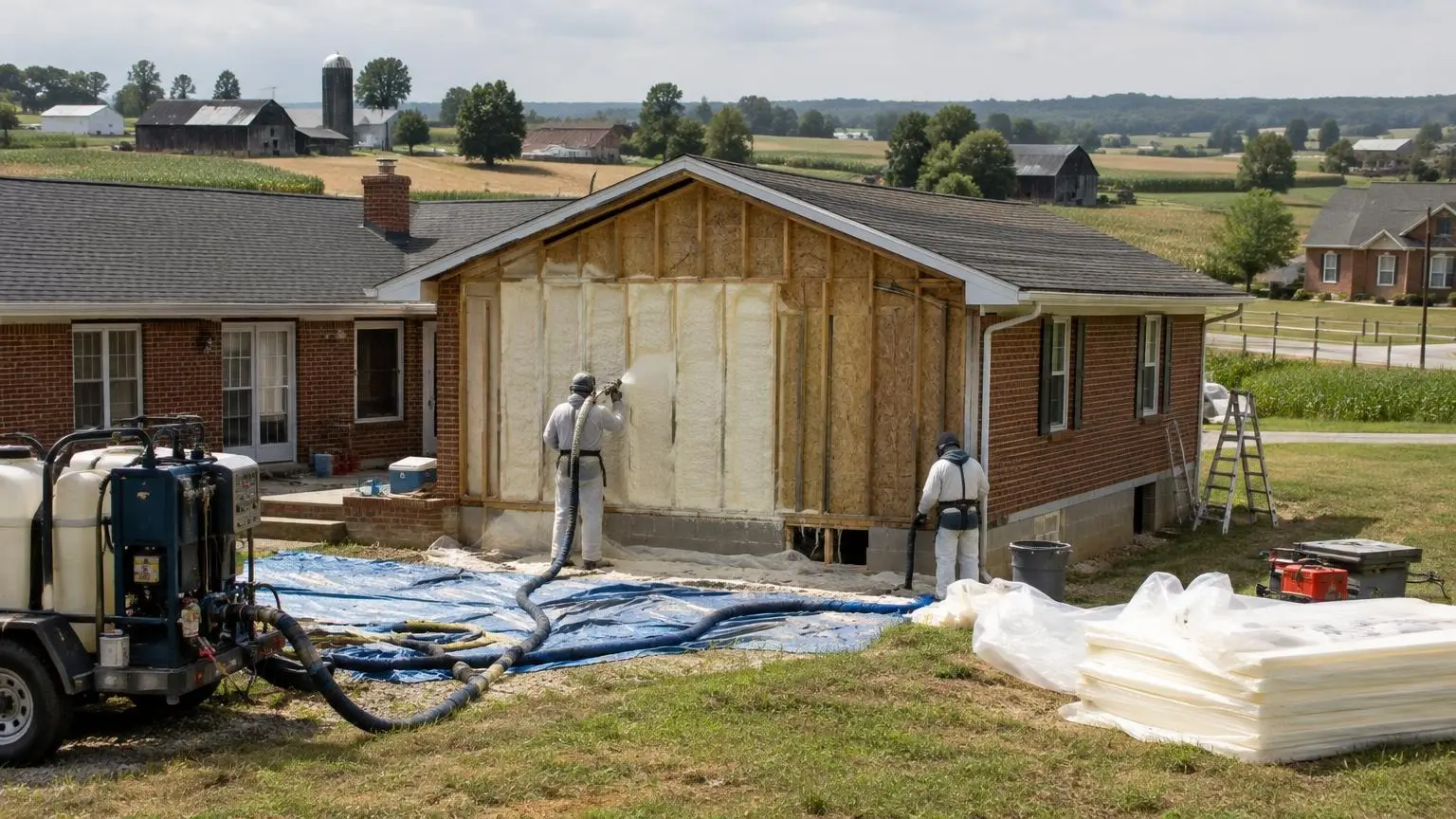
Spray foam insulation starts as two liquids mixed at the gun. It expands, fills cracks and cavities, and hardens in place. That means one layer both stops air and slows heat, which is why it works so well in the places where Hopkinsville houses leak most: rim joists, crawl space walls, attic penetrations and rooms over garages.
Closed cell vs open cell
Closed-cell foam cures into a rigid, dense layer. HomeGuide gives it R-5 to R-7 per inch. At typical depth it acts as a vapor retarder and will not hold water, and it adds stiffness to what it bonds to. Open-cell foam expands much more and stays soft, at R-3.5 to R-3.7 per inch. It is a strong air seal and quiets sound, but vapor can pass through it.
In Christian County's mixed-humid climate (Zone 4A on OpenEI's list), those differences decide where each one goes. Closed-cell belongs on surfaces near the ground or exposed to damp air: crawl space walls, rim joists, below-grade walls and steel buildings. Open-cell fits interior and exterior wall cavities above grade and many unvented attic rooflines.
Good places for foam
- Rim joists. The band of framing on top of the foundation leaks air around the whole house.
- Crawl space walls. Part of a sealed crawl space, keeping humid air and cold out.
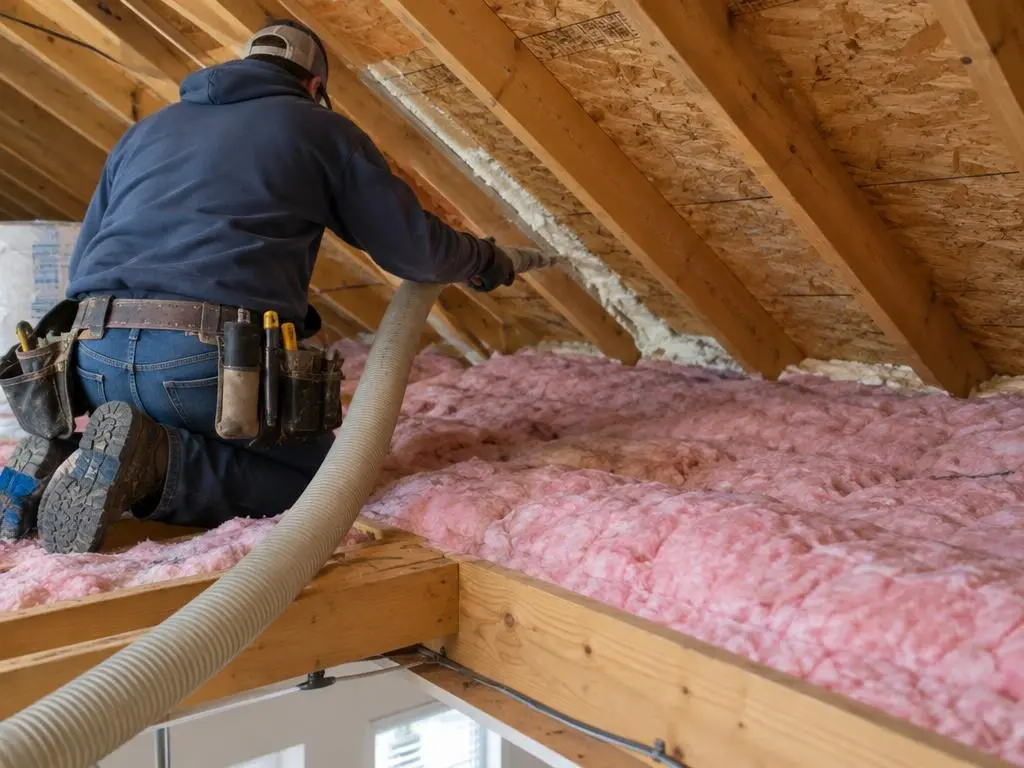
- Attic bypasses. Plumbing stacks, wiring holes and chases sealed before loose fill goes on top.
- Bonus rooms and garage ceilings. Rooms surrounded by unconditioned space.
- Open walls. Additions, remodels and new construction.
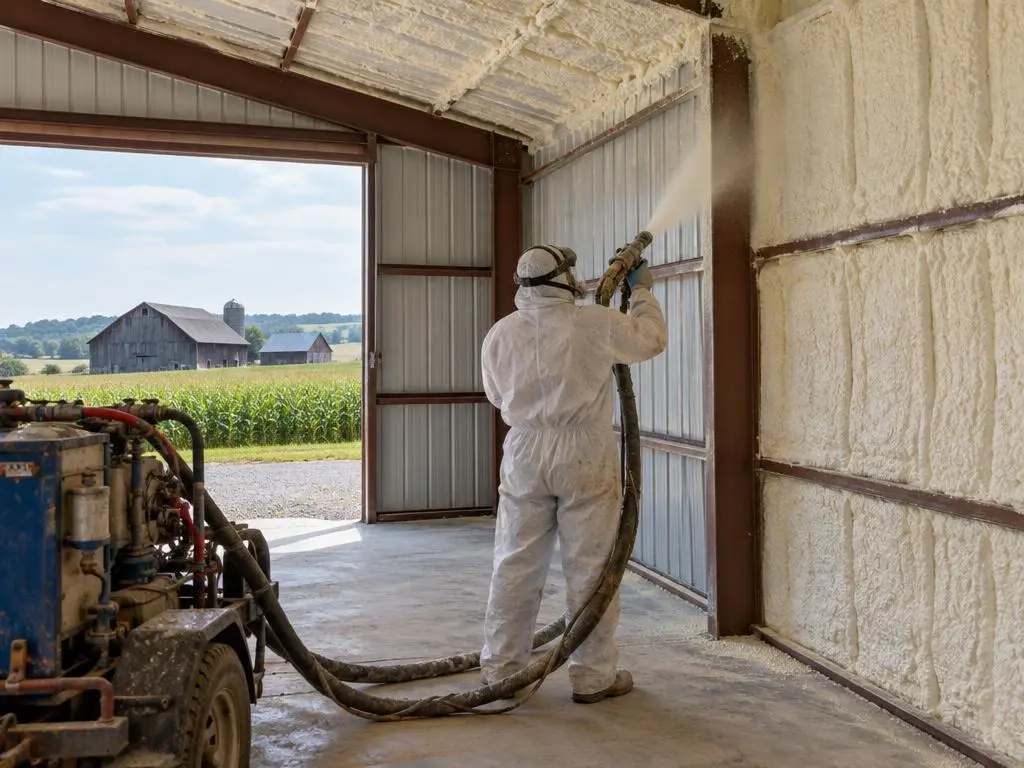
- Steel shops and barns. Foam on the metal stops condensation.
Where foam is not the answer
Foam does not fix leaks, and it should never go over wet or rotten framing. On a large, open attic floor, sealing the gaps and blowing in cellulose or fiberglass usually reaches the target for less money. Old wiring and suspect vermiculite need to be checked before any foam goes near them. We flag these in writing.
Before and after spraying
Prep takes most of the time. We cover floors and furniture, mask openings and set up ventilation. HomeGuide advises staying out of the home for at least 24 hours while foam cures. Crawl space and outbuilding jobs tend to be easier on the household, but we walk through the plan for your home ahead of time.
Typical Foam Applications
Where we spray most often:
Rim and band joists
Closed-cell to seal the perimeter of the floor framing.
Crawl space walls
Closed-cell on block or poured walls as part of encapsulation.
Attic rooflines
Open- or closed-cell under the roof deck for unvented attics.
Open stud walls
Additions and remodels before drywall.
Metal buildings
Closed-cell on steel walls and roofs.
Published Spray Foam Costs
| Job | Published range (source) |
|---|---|
| Spray foam, installed | $1.50 to $5.00 per sq ft (HomeGuide) |
| Open-cell / closed-cell | $1.50 to $3.50 / $3.00 to $5.00 per sq ft (HomeGuide) |
| Roughly 1,000 sq ft | $1,500 to $5,000 (HomeGuide); $3,150 to $7,500 in an existing home (Fixr) |
| Existing walls / new construction | $3.15 to $7.50 / $2.75 to $6.50 per sq ft (Fixr) |
| Exterior walls, whole house | $4,000 to $10,000 (HomeGuide) |
| Whole house | $8,000 to $20,000 (HomeGuide); $10,000 to $30,000 (Fixr) |
| Common job minimum | $1,000 to $2,000 or more (HomeGuide) |
Figures are national averages from HomeGuide's 2026 guide and Fixr's 2025 guide. Thickness, access, prep and the foam chosen all change the number, and small jobs often hit a minimum. Your price is the one on the written estimate we give you.
Our Foam Process
1. Visit and measure
We look at every space and check for moisture, wiring and access issues.
2. Itemized quote
Foam type, thickness, R-value and price for each area.
3. Prep and spray
Protection, ventilation, then foam applied in passes to the planned thickness.
4. Final check
Thickness verified, cleanup done, and you are told when it is safe to re-enter.
Spray Foam Insulation Questions
Is spray foam worth it in a Kentucky house?
Where air leaks and moisture meet, such as rim joists, crawl spaces and rooms over garages, yes. For open attic floors, blown-in over sealed gaps is usually the better value.
How thick is closed-cell foam on a rim joist?
Commonly 2 to 3 inches. Your quote states the planned thickness for each area.
Can foam go into existing closed walls?
Injection foams exist, but dense-pack cellulose is more predictable for most closed walls. Foam fits best where framing is open.
Does spray foam have a smell?
There can be an odor during application and curing, which is why HomeGuide advises staying out at least 24 hours and why we ventilate.
Spray Foam Insulation Service Areas
- Spray Foam Insulation in Hopkinsville, KY
- Spray Foam Insulation in Clarksville, TN
- Spray Foam Insulation in Oak Grove, KY
- Spray Foam Insulation in Pembroke, KY
- Spray Foam Insulation in Crofton, KY
- Spray Foam Insulation in Guthrie, KY
- Spray Foam Insulation in Trenton, KY
- Spray Foam Insulation in Elkton, KY
- Spray Foam Insulation in Cadiz, KY
- Spray Foam Insulation in Dawson Springs, KY
- Spray Foam Insulation in Nortonville, KY
Get a Spray Foam Insulation Estimate
Tell us which spaces you want foamed and we will quote each one.